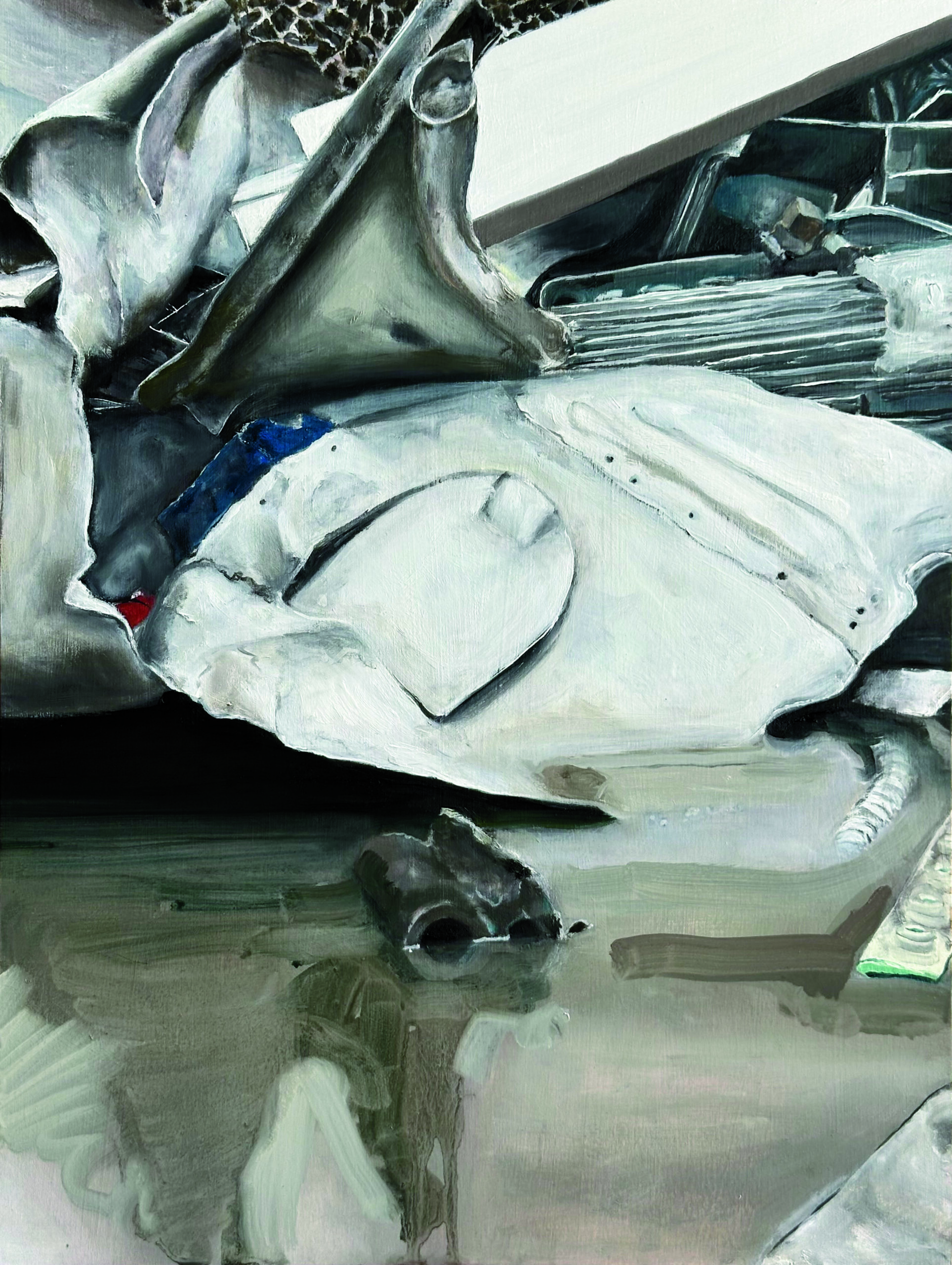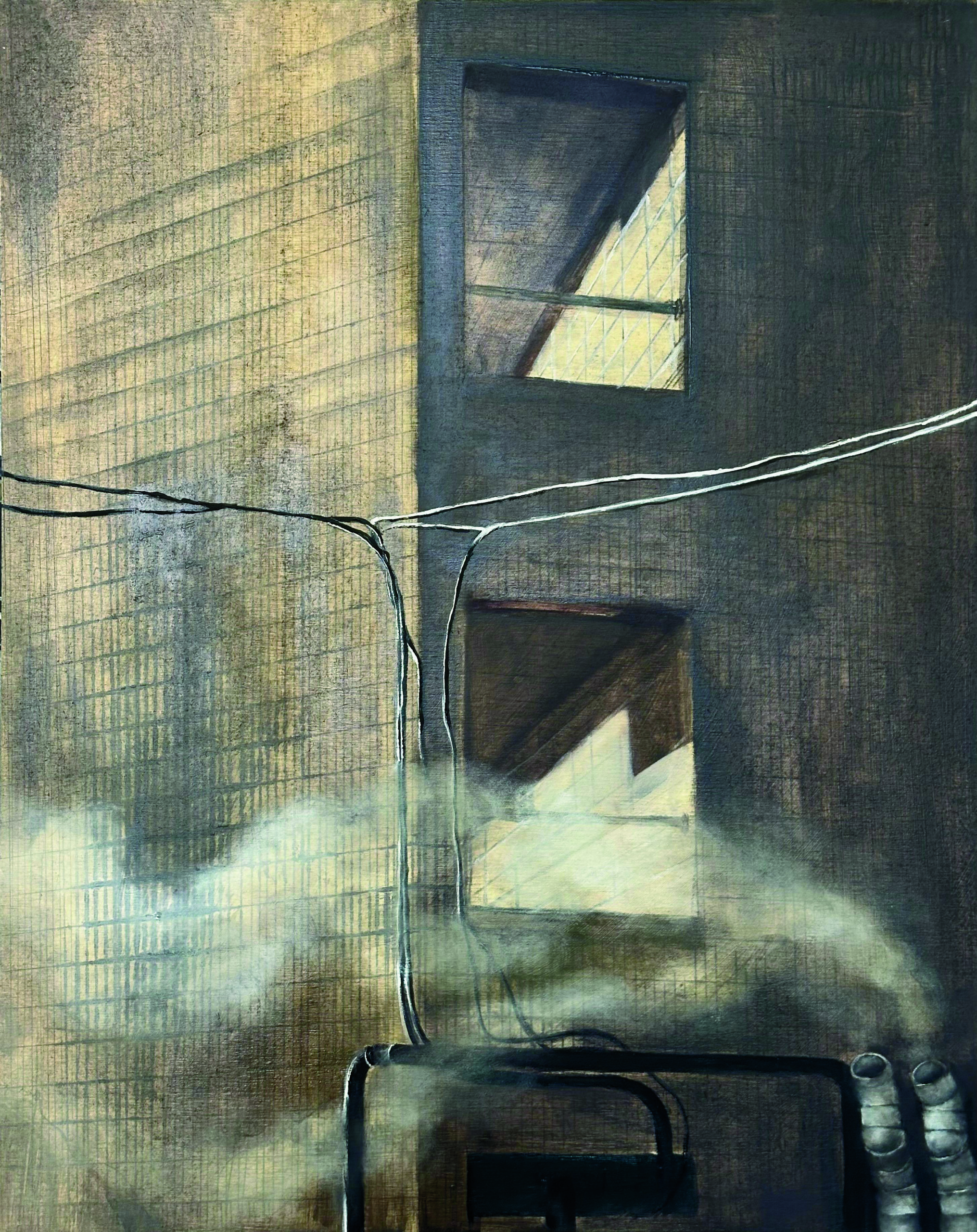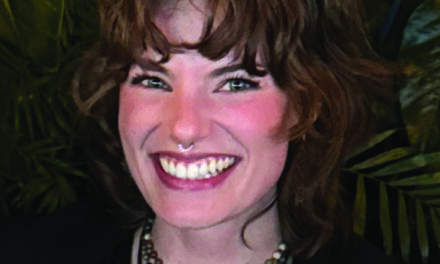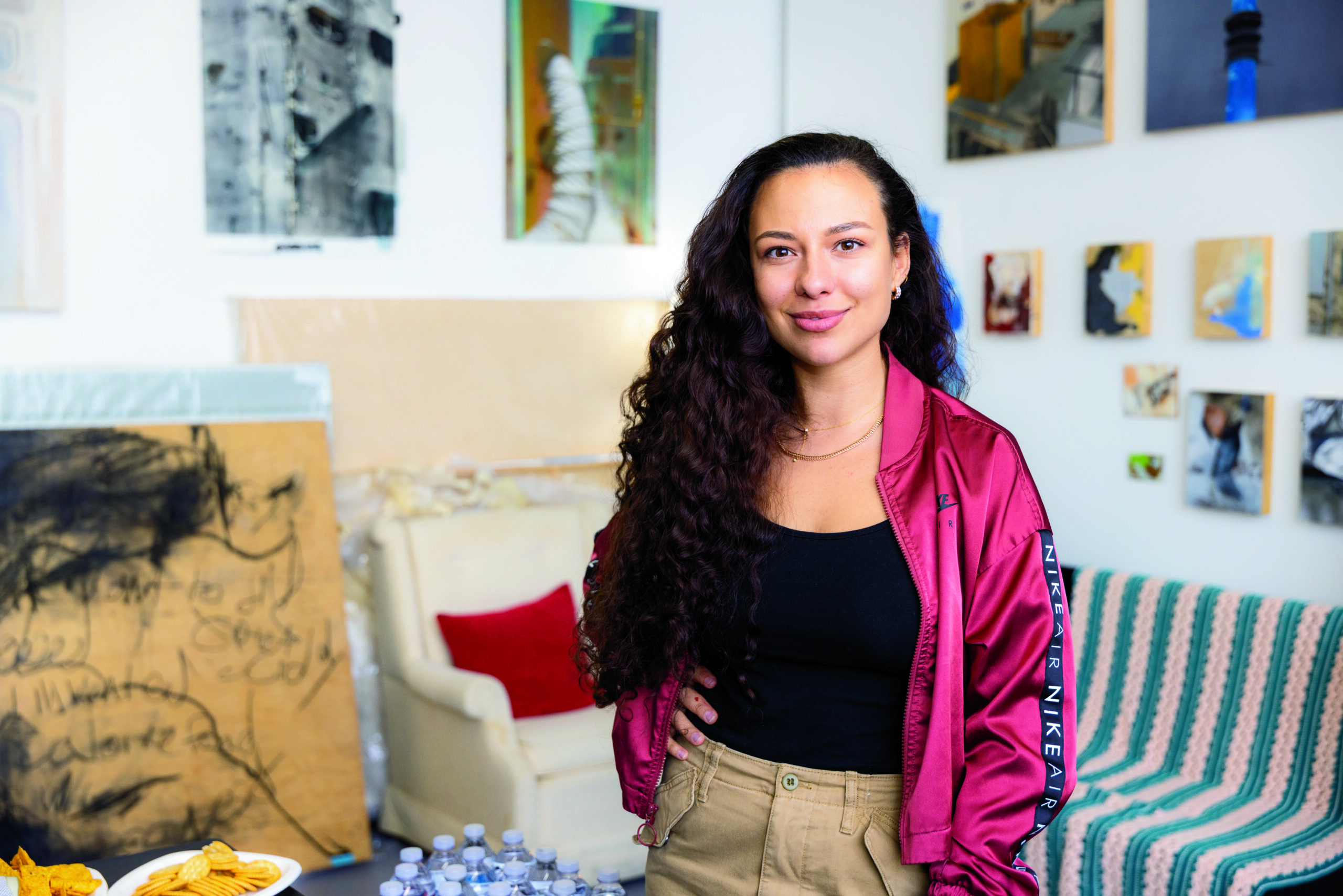
Nadia Younes is a resident artist at Center for the Arts Evergreen. She is a multimedia artist with a fixation on oil paints and a perpetual obsession with junkyards, construction sites, abandoned buildings, and sites of eerie industrial disrepair. Nadia and her subjects have a complex relationship that fundamentally rests in a sense of confusion, helplessness, and dissonance that makes her work feel at once desolate and desperately alive.
Nadia explores tension in her work. She describes painting as “familiar, but not always comfortable.” A place known but not always loved. “It depends on what state of mind I’m in when I’m working,” she says. Every painting brings its own challenges, and while the process itself seems deeply cathartic and therapeutic, this isn’t always an enjoyable or easy experience. To me, Nadia’s paintings feel like they are straining at the seams with emotion and story.
“Every project involves compromise and collaboration between artist and material.”
Many of her paintings depict real scenes, especially sites of industrial construction, demolition, or abandonment. Nadia is a Muslim woman from Nazareth who lived across the Middle East and Africa before coming to the United States to attend Yale University. She grew up in places where gender roles are very rigid and the social divide between women and men is much wider than that of the United States (and especially Colorado). Industrial spaces are traditionally very male-centered and male-controlled, and Nadia could only access these painting sites at personal risk to her safety and autonomy. These paintings therefore deal, in part, with vulnerability; especially, she says, “with the limitations of my own body, and the frustrations of having a female body.” By challenging the regulations of allowance, however, Nadia reclaims these spaces and her own agency within them. In doing so, she regains control over the story of space on her own terms. There’s a certain intensity and romance to this process that is easily perceptible in the subsequent paintings. The conversation we have about this experience being a crucial influence in her work sticks with me long after I leave her studio.
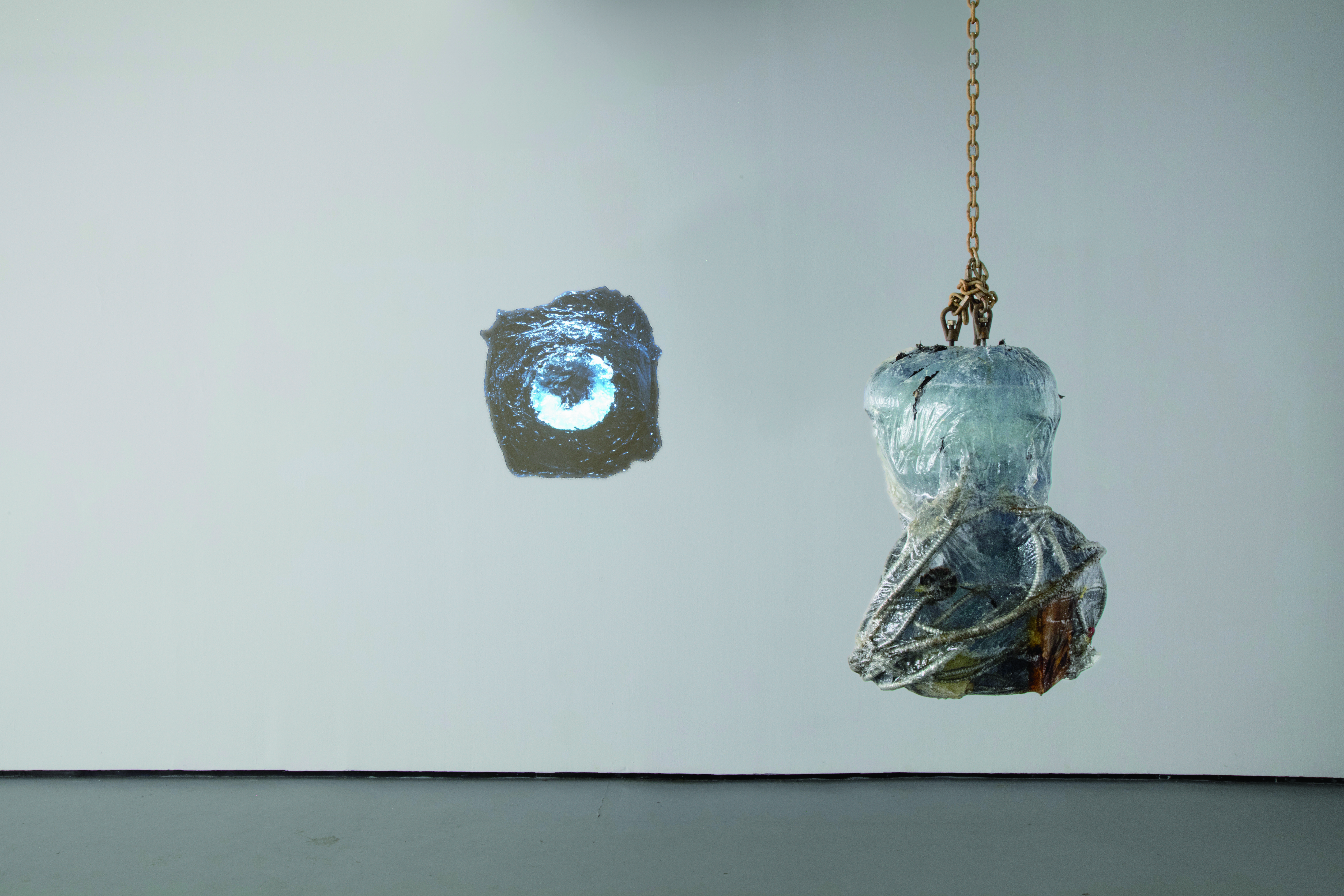
Nadia also has an expansive portfolio in sculpture and installation. When we get to the subject of her installations, especially Interference Pattern—composed of a dismantled car frame, a projector screening footage of Nadia, and running water—she describes the work as an exploration of body. There’s a tension between the aliveness of Nadia-on-screen and the creaking skeleton of the vehicle. This project seems like a conversation between the human body, with its softness projected in warm tones, and the crushed, dirty, human-made body splayed out under cold blue lighting.
Nadia has also worked with resin, lead, bits of wire and pipes, trash bags, tar, and a dozen other materials in her sculptures. She categorizes different substances as living or dead. “Acrylic paint is dead,” she says, “but metal can become alive when activated through attention, manipulation, and heat. Metal can hold in-between states. Resin is synthetic, for some reason,” she laughs. “It’s so hard to explain why I think this way.” Nadia’s consideration of her material as living or dead also seems to relate to her notion of creating art as a “negotiation.” Every project involves compromise and collaboration between artist and material. She does not fool herself into thinking she has complete mastery or control. It’s a relationship; a conversation. This certainly makes for engaging, exhausting, and powerful creations.
Another throughline I see across Nadia’s work is a question about control. Her paintings are incredibly precise, methodical, and restrained in a way that suggests a struggle for perfection (or at least accurate storytelling). Nadia implies during our conversation that she’s had experiences with feeling helpless, especially as a child. For her, art has become a way of retelling her stories through confined, acutely aware subjects that feel easy to ground into. “I remember exactly what I felt with each work,” she tells me. “I give them my heart and soul; many times that feels uncontained and uncertain.” It can be a frustrating process, but the end result “reflects those emotions perfectly.”
When I visit her studio for the interview, my first question is: How are you liking Evergreen? She talks excitedly about the peace she feels in nature and how much she loves seeing elk. It’s a different place than anywhere she’s been. Later on, however, she tells me, “fear is the same everywhere.”
“Here, people have emergency bags for fear of wildfire. Back home, in the Middle East, we had emergency bags with our passports and documents in case of a bombing.” She finds comfort in the sameness of emotion. We all experience anxiety, fear, love, curiosity, playfulness, sadness. For Nadia, this helps her find and build community, even when living from place to place in temporary time.
My final question in almost every interview is, “What is one thing you hope people take away from this article?” Nadia says, “All we have is the now. Life is a game, and we give things too much significance. We take ourselves too seriously.”
Nadia will be staying at the residency studio at Center for the Arts, Evergreen until May 2. You can see more of her work at nadia-younes.com or on Instagram at @nadiayounes