A lot of folks ask me about alpacas in general, but the most interest is always around shearing day. How often do you shear? Do you do it yourselves? Does it hurt the alpacas? Can we come watch? Do they spit? Do they kick? What do you do with their wool? Is it even called wool? Does it itch? I saw a video on YouTube and it was horrible!, etc. So this seems a good opportunity to unravel the Mysteries of Shearing Day. I first wrote this in May 2018 when we had around 20 or so alpacas, but I still get asked regularly, so it seems a good time to review. We are now down to 13—they are aging out and so are we—so the process is much faster and we only need one station. Even with other farms coming here, we’re now done by noon. Piece of cake, but still a lot of squats.
We shear once a year, in May, and it’s a production, lemme tell ya’. Several farms gather together, we start around 7 am, finish around 5 pm, and usually have shorn over 80 alpacas by the time we’re done. No, we don’t do the actual shearing ourselves; we have professionals who know what they’re doing and can actually be trusted with sharp implements. (I have proven time and time again that I cannot, but those are stories for another day. Suffice it to say, I’m certain now I do not have worms.) They also bring really great music for the occasional dance break.
“It’s like watching a very well choreographed ballet.”
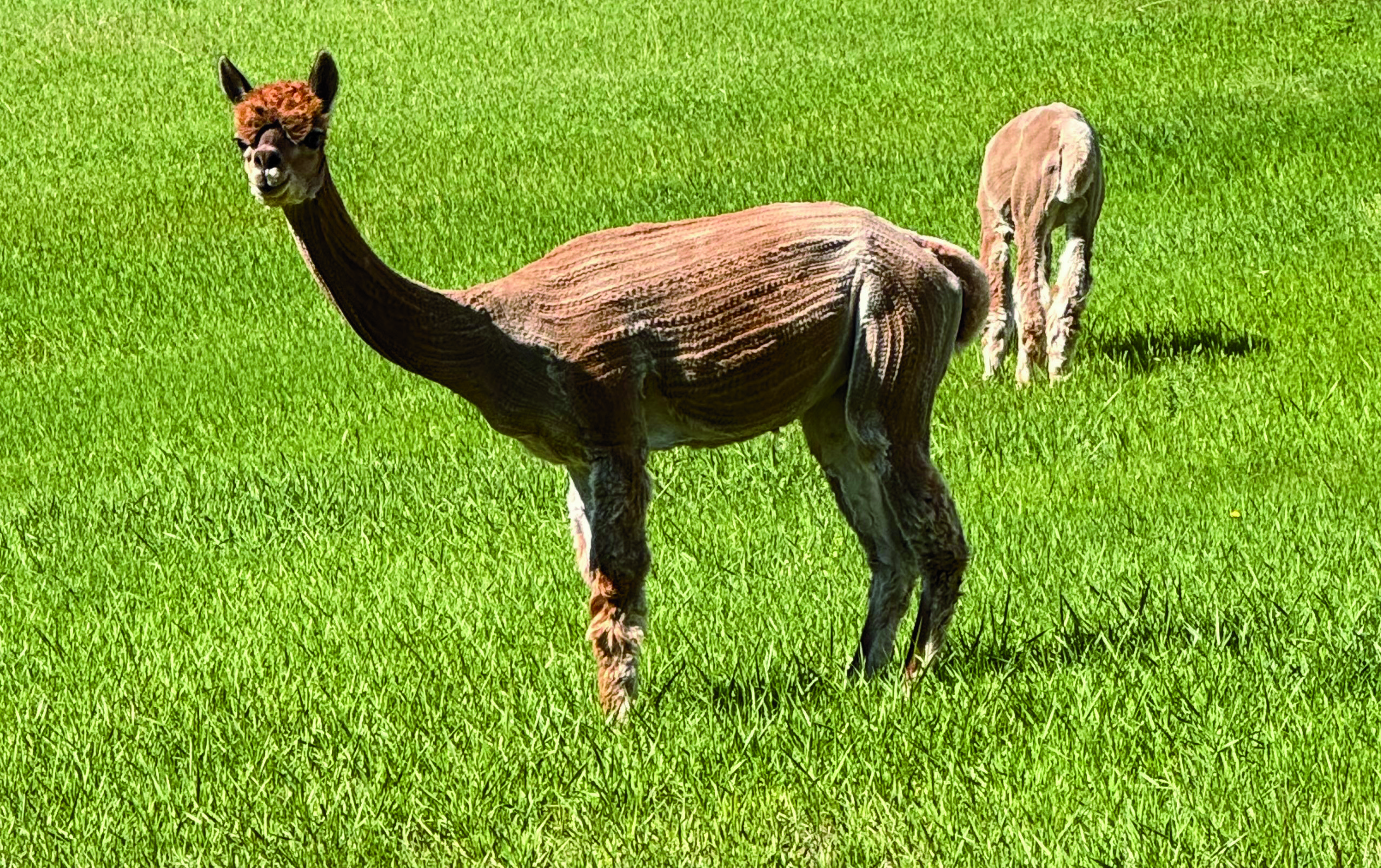
It does not hurt the alpacas; it does tend to tick them off a bit, but their relief and comfort afterward is palpable—although the first one done and back to the stall gets very embarrassed at being naked and is openly mocked by the others. The actual shearing itself takes about six minutes per animal (told you these guys were pros). The process goes something like this:
Two stations are set up with mats, ropes, pulleys and as many people as we can con into helping by bribing them with food. At the first station, an alpaca is walked in on a halter and lead. Some of them are lovely and stroll in like it’s a day at the spa. “Just a trim, please.” Others (ok, mostly ours) will scream, spit and kick you in the kneecap with the precision of a Radio City Rockette. (Yes, Willow, I’m talking about you here, missy.) While a couple strong guys hold the alpaca up off the ground, two of us jump in and attach the ropes to the front and back ankles. Another person then pulls the rope taut (ok, runs like a crazy person; it takes a boatload of strength) and the alpaca is gently laid on the mats with legs stretched out. In all seriousness, I cannot stress enough how amazingly gentle our crew is with each animal during the entire process.
Next, toenails and teeth are trimmed if needed, and then the shearer and the “head man” step in. It’s like watching a very well choreographed ballet. While the shearer runs the clippers, the head man holds the alpaca’s head and turns the alpaca as needed. The rest of us jump in to grab and bag the fleece, man the toenail clippers, and stand by with brooms at the ready. The primary blanket, which is from shoulders to hips, comes off first, all in one piece, and is bagged separately after appropriate oohing and aahing. Next is neck, legs, and a little around the topknot and face if needed. Once done, the halter is put back on, the ropes are released and removed, the alpaca is taken back to the holding stall, and the mats are swept up of any stray fleece bits. And there are always a lot of stray fleece bits.
That’s it.
Repeat.
80 times.
With an average of 14 squats per person per animal. Plus lifting, running, ducking, kneeling, standing, sweeping, etc. Feel the burn, baby.
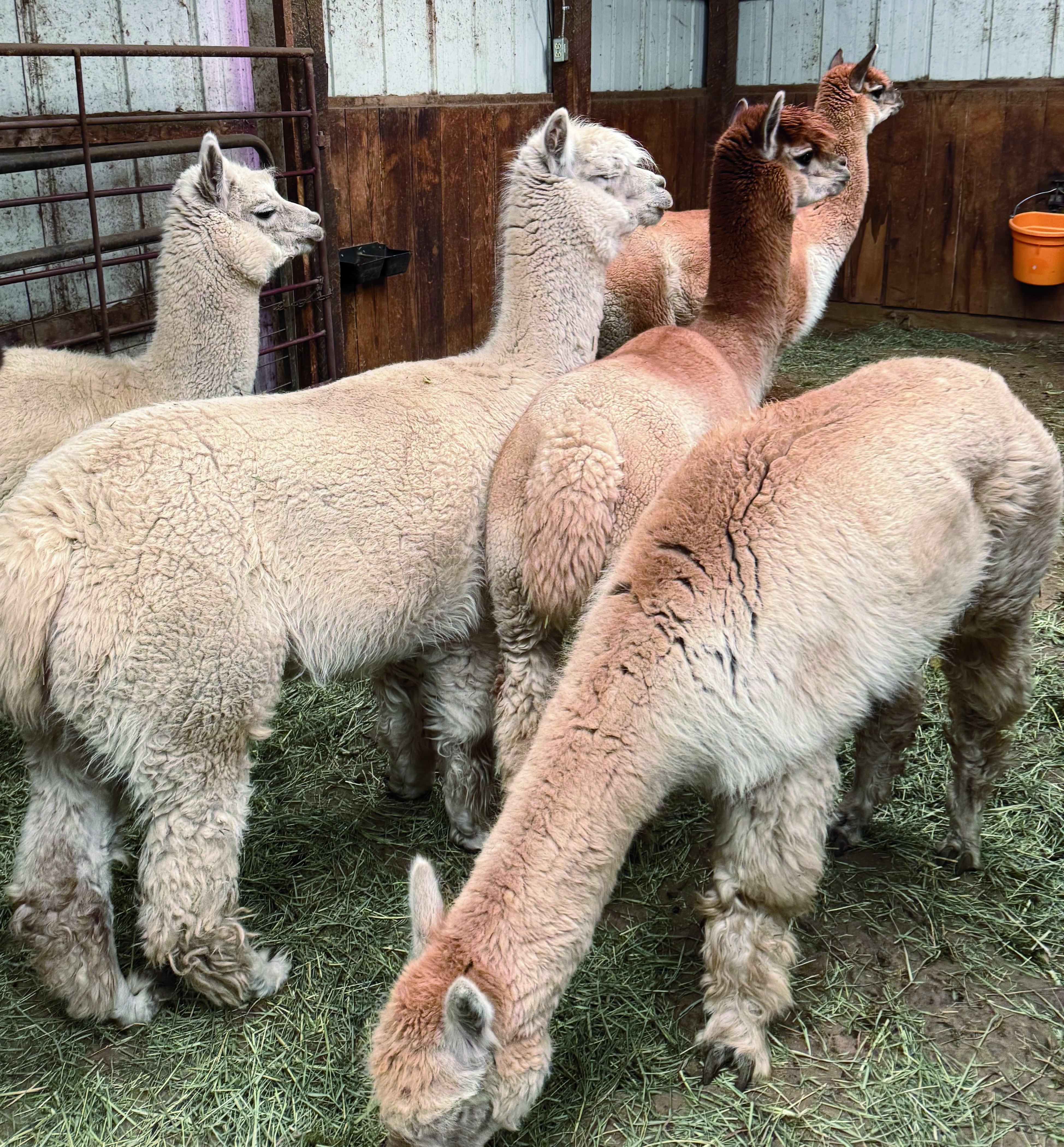
Afterward, the blankets are sorted and skirted, which is a bit of cleaning before the fleece goes to the mill for processing. It gets laid out on a large screen and we pull out as much of the veggie matter and hay bits as possible, plus any non-uniform areas of the blanket, tumble it to get rid of some dust, and bag it up for the mill. At the mill, they wash it, card it (get those fibers all going the same direction), blend it with other fibers if desired (I usually blend with bamboo, silk or Merino wool), spin it into skeins of yarn and then send it back. From there, I dye it, hoard some of it, and sell the rest to other rabid knitters.
In 2003, at our first shearing, I remember sitting with the group afterward and feeling both happy and exhausted. And grubby—really, really grubby. One of the women with us was in her 70s and had been an alpaca breeder for many years. I made a comment about how new this all was to me, and that I now was more excited to get the Murdoch’s ranch supply catalog than I was to get Bloomingdale’s. Her reply: “You’re definitely one of us, now.” The 2026 update now is that I’m midway through my 60s, Superhubby is early 70s, and now we make a lot of noises with those squats. I say “oof” a lot and you can hear my knees down in Denver. Yet they make us laugh every single day, and we still wouldn’t give it up for the world.