
by Wayne Paugh
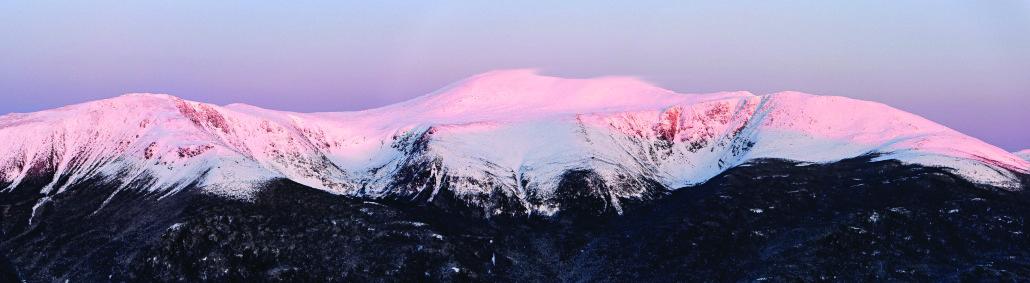
The winds were expected. I was walloped when I crested the ridge despite the relatively calm forecast that day. After reading so many stories, I had finally felt the power of Mount Washington for myself, atop the eastern seaboard. Although not the Armageddon force of winter weather at the 200 mph threshold, I was in awe of nature again and was reminded of my years in the Colorado alpine.
When I moved from Evergreen back to the Washington, D.C. area in 2022, I knew I would miss the climbing and sublime suffering that would take me to the top of every 14er peak. I missed the summits. And I missed the journeys to them.
The deciduous trees of the east engulfing the Shenandoah Valley are an inferior alternative to the conifers and evergreens. The forest floor in the mountain west is tidy compared to the litter of leaves and pungent decay here. And the forest fragrance—the smell of crisp pine lingering in the air is unmatched by most trails in the D.C. area. While fall colors are undoubtedly varied and spectacular back east, lasting much longer than the quaking gold of the aspens, the outdoor adventures of the D.C. region fail to inspire in the ways Colorado’s high peaks provided.
“Temperatures regularly reach minus 40 degrees Fahrenheit in the winter, with wind chills piercing the depths of minus 100 degrees F.”
A colleague suggested having a look at the White Mountain range up in New Hampshire. Most articles I read centered on the slopes of Mount Washington and its history. Located amongst the Presidential Range in Coos County, NH, Mount Washington stands only 6,288 feet at its summit—but with 6,148 feet prominence, it rivals that of most Colorado mountains. In fact, Mount Washington is the most prominent mountain east of the Mississippi river.
The first recorded ascent was in 1642—nearly 400 years ago—and the earliest known map with Washington referenced was in 1796, when his excellency George Washington was likely still president and, in any event, still alive. But the mountain’s history and observed natural events decidedly overshadow its weighty namesake. Severe and erratic weather has been a wary feature of the mountain since America’s founding. On April 12, 1934, instruments recorded a sustained wind speed of 231 mph that stunned scientists everywhere. At the time, it was the highest recorded wind speed on planet earth and only later surpassed by weather phenomena associated with cyclones and tornados. Temperatures regularly reach minus 40 degrees Fahrenheit in the winter, with wind chills piercing the depths of minus 100 degrees F. It seems difficult to contemplate an environment that cold.
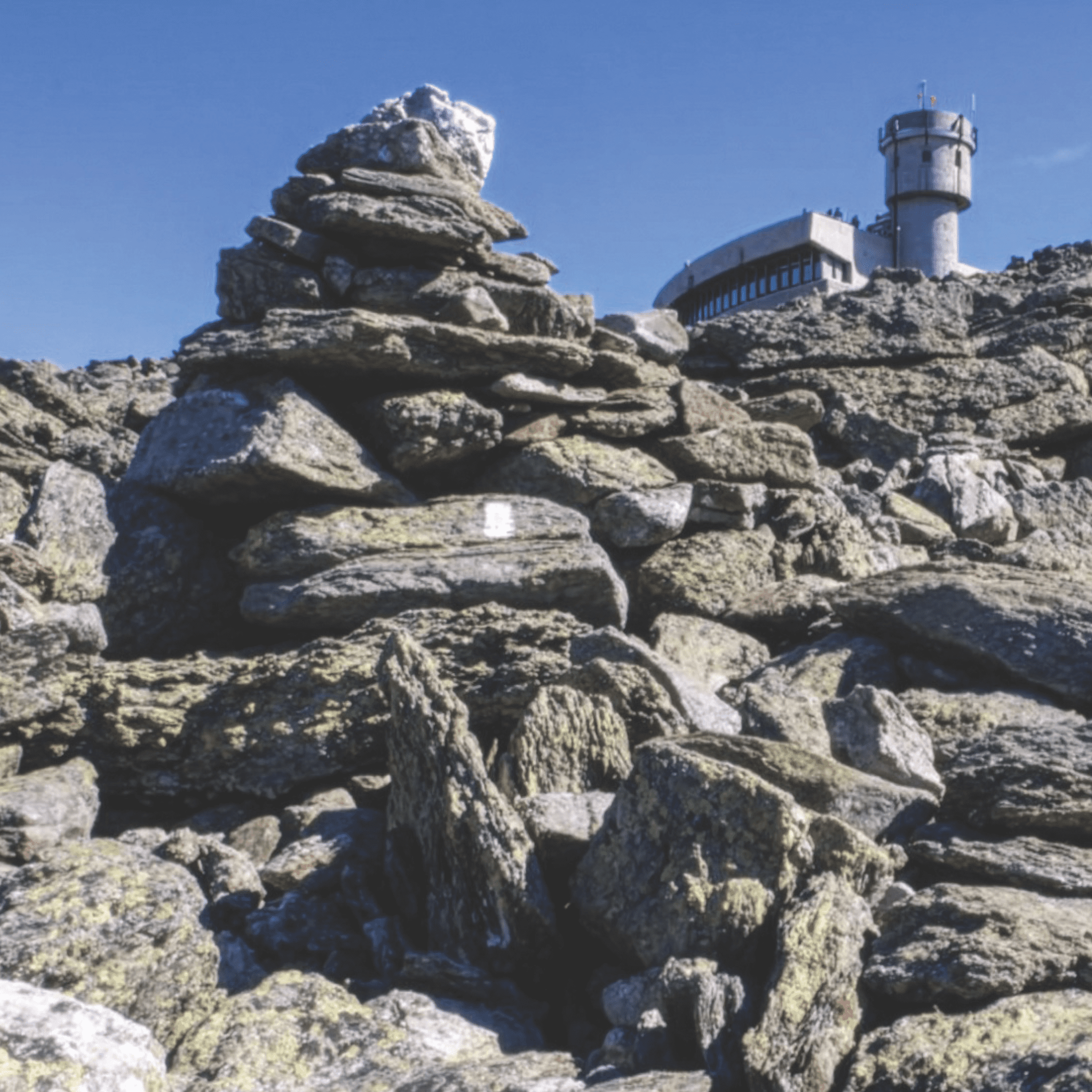
The weather is the primary reason that Mount Washington has witnessed over 140 deaths since 1849. It is also the reason that scientists established a makeshift observatory on the summit in 1892 to study the mountain’s unusual weather patterns. Some 40 years later, the Mount Washington Observatory was constructed and still serves its original purpose. In fact, volunteers are regularly sought throughout the year to assist with tasks including monitoring weather instruments and even thumping the rime ice build-up outside.
Similar to Pikes Peak, there is both an auto road and cog railroad to the summit. Originally named the Mount Washington Carriage Road, the winding 7-mile Auto Road was completed in 1861. Shortly thereafter, the cog railway opened in 1869 and attracted many visitors seeking respite from the daylong horse and carriage trip. That is, until the early 1900s when Henry Ford and the motorcar entered into the human lexicon.
As for the climb, I was drawn right away to the rugged Tuckerman Ravine in hopes of finding a trail that reminded me of prior Colorado climbs. Although not a technical climb, and mainly Class 2, the physical effort over the 8-mile round trip on rocky and steep terrain would require 4,280 feet in elevation gain. With the exception of altitude, these numbers are not too dissimilar to those encountered on several 14ers. My main concern was watching the forecast because of the high risk associated with unpredictable weather and exposure—even for late July 2025.
“Similar to Pikes Peak, there is both an auto road and cog railroad to the summit.”
To be sure, Mount Washington is often listed in the Top 10 most dangerous peaks—not based on terrain but based on conditions. Why the Top 10 ranking? Because multiple storm tracks pass over its summit including the Atlantic, Gulf Region, and Pacific Northwest, resulting in hurricane force winds an average of 110 days each year. So, about 30 percent of the time, there is a hurricane blowing atop Mount Washington. Additionally, the cold is legendary. Low temperatures of below zero typically occur from November 17 through April 1. Recently, during a stretch in February 2023, the temperature fell to minus 47 degrees F with a wind chill of minus 108 F (a U.S. record). The oft-cited “Home of the World’s Worst Weather” appears deserved.
But what about the balmy summer days of July and August? The lows atop the summit can still fall below 20 degrees with unpredictable and rapidly changing conditions that can surprise unprepared hikers and quickly lead to deadly situations.
Starting at Pinkham Notch, the Tuckerman Ravine trail climbed through the forest and steadily ascended over 1,800 feet to reach the Hermit Lake shelters. From there, the trail narrowed and steepened as it approached a headwall with a waterfall in view. After scrambling up the headwall and reaching the ridge, the climb veered to the right and continued up another thousand feet of scree over 0.6 miles to the summit where the Observatory awaited. While closed tight in the winter, my late July hike afforded a welcomed visit amid mostly blue skies and whipping winds.
Though rare, on a clear day you may have over 130 miles of visibility into New York, Quebec, and even to the Atlantic Ocean. But, how things change quickly: Standing on the summit, I watched as very low cloud cover rocketed across the sky and blanketed the peak and the surrounding world. Visibility had vanished for the day.
Similar to the highest summits of Colorado, Mount Washington is treeless despite being over a mile and a half below the 14,000-foot mark. But the treeless landscape is not due to the inhospitality of elevation but because of the harsh environment. Even at 6,288 feet, the summit landscape is considered an exposed alpine zone with over 65 acres of tundra—most of any peak east of Colorado.
Having climbed all 14ers, I cannot report the difficulty being greater, but the history, meaning, and elements added depth to the Tuckerman Ravine challenge. Just a few months later, in late October 2025, over 20 ill-prepared hikers had to be rescued when they reached the summit desperately seeking shelter and not realizing the Observatory was already closed to the public for the season.
Colorado’s naming connections to our nation’s origins remain undeniable: Jefferson County, Mount Lincoln, and Capitol Peak to name a few. Celebrating 250 years of America’s history in 2026 might encourage a visit east to pay homage to our rich history on the National Mall, across the Potomac River to General Washington’s home at Mount Vernon, and north to Philadelphia and Washington’s Crossing to New Jersey. The history runs deep and will surely stir a rush of patriotism—especially this year. An even farther drive north to the White Mountains will afford an encounter with Mount Washington itself. All worthy destinations—and arguably necessary visits for an American. You’ll certainly return richer in experience and perspective—though perhaps even more appreciative of being able to enjoy the unique quality of life in the foothills.
As for me, I’m grateful to remain a part of my former Evergreen home through close friends, my continued service to the Alpine Rescue Team, and receiving Colorado Serenity Magazine by mail. Someday I will return. Until that time, I plan to explore more of the White Mountains and immerse myself in the abundant American history found throughout the colonies of old.
Wayne Paugh is a government attorney and former Evergreen resident currently living in the Washington, D.C. metro area. He can be reached at [email protected]
