Anyone who lives in Evergreen, works in Evergreen, visits Evergreen, or has only ever heard of Evergreen would probably agree to the following statement: Evergreen is creative. We’ve always been creative. From the trademark Bell Tower at the Church of the Transfiguration to the iconic hand-carved-and-painted “Welcome to the Heart of Evergreen” sign on Highway 74, Evergreenites have always had a unique penchant for making things. It must be something in that sweet ol’ mountain air.
To me, what’s truly impressive is the fact that we’ve been able to build a thriving creative community without formal infrastructure or support. We proudly proclaim “we’re unincorporated!” as though possessed by the fierce spirit of our pioneer ancestors. While having no city government imposing pesky little sales taxes on our local galleries is certainly something to appreciate, there’s also the small problem of limited civic and social support for our many independent organizations, nonprofits, and community-run programs. Creative entities like Center for the Arts Evergreen and Ovation West Performing Arts often operate in their own bubbles, relying mostly on personal relationships to stay connected and private donors to stay afloat. This independence has bred resilience, but it has also left gaps. What if there were a way to bring everyone into the same conversation, to shift independent creatives away from competition and toward collaboration for shared, long-term success? Enter the Evergreen Creative District.
“We’re the first and only unincorporated creative district in Colorado.”
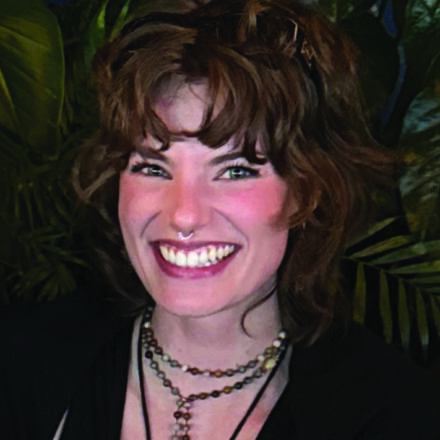
“Everyone is already a member,” says Sarah Hess, the current president of the Evergreen Creative District (ECD). To paraphrase: by being a member of the community, you already belong with us. This central philosophy is a good touchstone for the mission of the ECD. But what is the ECD, and why does it matter now?
A creative district acts as a state-recognized focal point for the artistic and cultural life of the community it serves. It strengthens, celebrates, and enhances the area’s unique identity while driving the local economy by attracting artists and visitors. Across Colorado, creative districts take many forms, from straightforward cases like Denver’s Santa Fe and RiNo districts to smaller, more rural models. In Evergreen, it’s a little more complicated.
“Being unincorporated, we have to invent the rules a little,” admits Ron Isaacson, executive director of the ECD. He introduced the concept for state certification through Colorado Creative Industries in 2014 but the application was rejected because Evergreen didn’t meet certain criteria: we are not a walkable community, nor do we have the support of a building improvement district. During COVID in 2020, many arts communities were forced to reinvent themselves, and Colorado Creative Industries opened its mind to arts districts that look a little different. Isaacson brought creative community leaders together to explore the concept and develop the ECD in 2022. In May 2025 they submitted their proposal and received acceptance this past October. “It felt like winning a gold medal,” he grins. “We’re the first and only unincorporated creative district in Colorado.” This certification comes with a small annual grant from Colorado Creative Industries, but this is just the beginning. It isn’t about bureaucracy or branding—it’s about legitimacy, access, and sustainability.
Executive Director of Ovation West Performing Arts Graham Anduri describes our many arts organizations as ice cubes, and the ECD as an iceberg. “An iceberg has a lot more sustaining power than ice cubes… when put in water, ice cubes melt, while an iceberg can withstand pressure.” Anduri serves as a board member for the ECD because he believes that a creative district offers a unique opportunity to “promote, preserve, and protect” Evergreen’s artistic magic. The ECD does not attempt to build something new, but rather protect what’s already here. It ties our individual organizations together to strengthen each voice and ensure that everyone is heard. “We work better together than separately,” he adds.
“It’s a little bit hard to define what we do, and that’s because our work is call and response,” Hess tells me. Hess’s previous experience working with the Louisiana Creative Industries informs how she understands her role in Evergreen, especially through a lens of place-making. Her mission with the ECD is to notice what makes Evergreen special and then work to celebrate, protect, and enhance that. This past summer, ECD worked closely with Evergreen Park & Recreation District on the designs for the Buchanan Park Pavilion. A collaboration with EPRD board members Peter and Peggy Eggers brought the pavilion architects into direct conversation with musicians who will be using the stage. The conversation yielded some slight changes in the pavilion design; the musicians noticed that the stage lacked enough dedicated electric outlets on each side as well as speakers to project sound to the furthest audiences. The changes were minor but it will be a major improvement for the experience of the artists.
A current problem the ECD is working on is related to the many festivals we enjoy here, from Foothills Fourth to The Big Chili Cook-Off. While festivals are great for bringing in tourism, local shops and restaurants often suffer lost profits on these days because visitors are spending their money at the event. The ECD has created a Festival Task Force to work on collaborative solutions between festival organizers and local businesses to ensure that these events can benefit everyone. It’s all about getting the right people together in the same room. “Our goal is that everyone feels heard,” Hess explains.
On January 31 and February 1, the ECD will be hosting a “Creative Playground:” a series of workshops at CAE and Center Stage featuring opportunities for community members to engage in visual arts, dance, singing, acting, and short films. The event marks the beginning of a more intentional, coordinated effort through the ECD’s Healing Arts Task Force: to reinforce the arts as legitimate avenues for healing, mental health support, and community connection.
In the wake of the September 10th shooting at Evergreen High School, Anduri sees a clear and necessary role for the arts in community healing. “Yes, the arts entertain,” he tells me, “but they exist for a much deeper reason.” Creation, he explains, allows people to explore the fullness of the human experience and connect with others in deep, sustaining ways. For Anduri and many others, art is “more than a distraction:” it is both preventative care and recovery. By fostering and supporting spaces that promote emotional expression, problem-solving, empathy, and connection, ECD hopes to reinforce therapeutic creativity in partnership with Evergreen’s broader arts community. They are acting, in their words, as creative cheerleaders who hold the foundation so everyone else can climb up and shine.
Currently, the ECD is an all-volunteer board with Isaacson as the sole paid staff member. In the future, they hope to hire a paid administrative staff member to help organize and streamline communication between their many task forces and projects. ECD exists to remind us that Creativity Lives Here and they’re asking us to protect what we’re already doing. They’re insurance. The Evergreen Creative District isn’t about the next year or even the next decade. It’s about making sure Evergreen remains Evergreen for generations to come.
Visit evergreencreativedistrict.org for more information.