We all know that when God made dogs, he didn’t make any mistakes. From the tips of their adorable ears to their wet noses to their scratchy paws and fur-covered bodies. No matter the breed, every dog is a work of art. That being said, I would argue that the very best part of every dog is its tail.
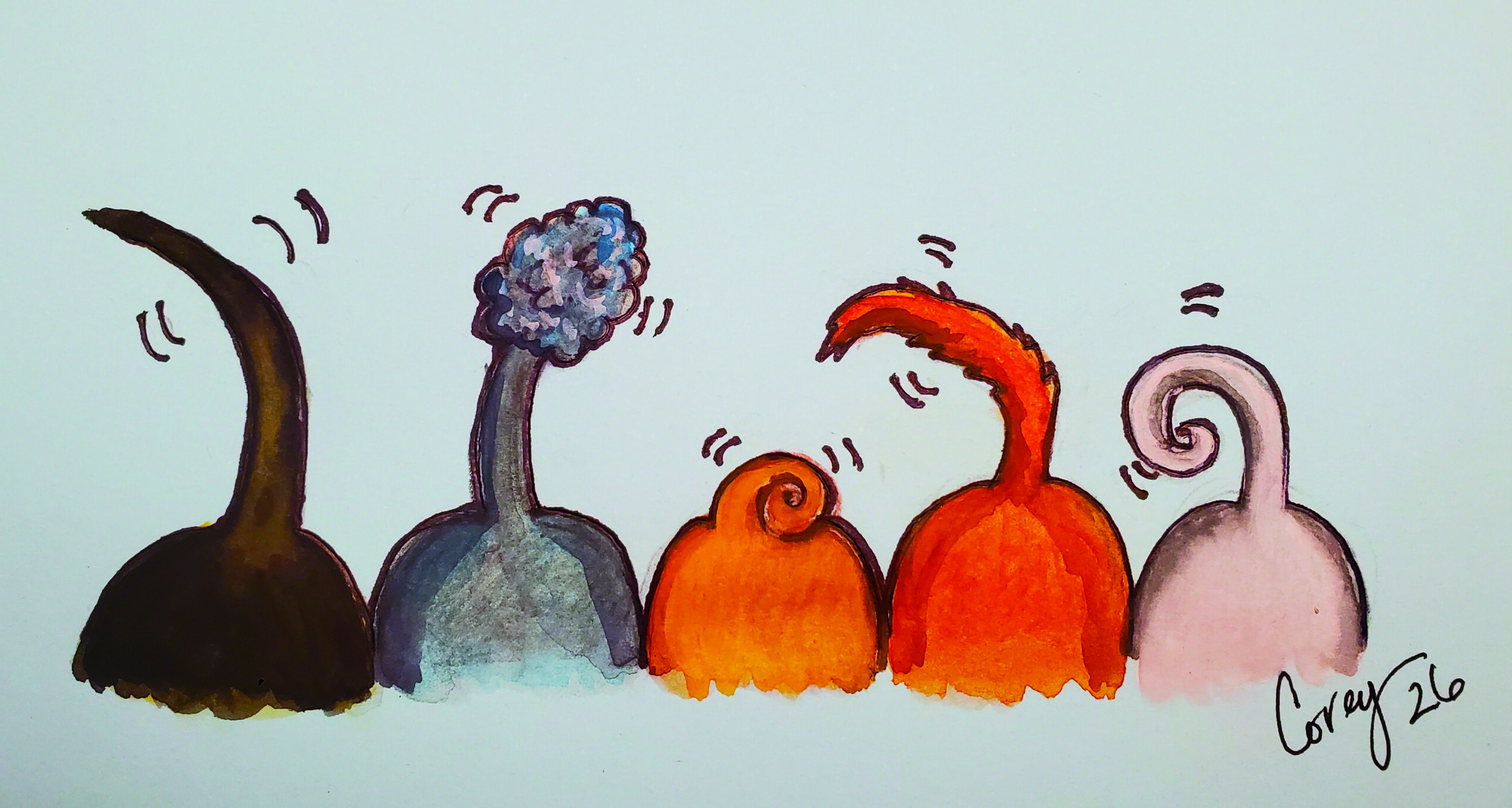
A dog’s tail is signature to its breed, of that there is no doubt. Picture a white Standard Poodle. If properly groomed, the end of that poodle’s tail looks like a snowball. Now picture the Rottweiler’s cute little stubby tail. Stubby or not, it is still one of the most expressive parts of that breed. The Husky’s tail curls up into a furry donut shape—and the tail of a Pug is curled so tightly it resembles a cinnamon roll. Havanese tails look like pom- poms. Labrador tails have a lot in common with otter tails—thick at the base and ending in a point. The breeds with long skinny tails—Whippets, Greyhounds and the like—have a weapon on board, locked and loaded. Any surface at tail level can be cleared instantly with one swipe of that whip of a tail. Being struck in the leg with those tails can leave bruises.
“ …my favorite tail-wagging style is when they put their whole backside into the wiggle.”
Of course, the best part of dog tails is how they use them to express themselves. The other day I was silently seeking the whereabouts of our Daisy before I shut her dog door. I didn’t want to shut her outside, you see. I gazed out the windows facing north, east and west. When I still didn’t spot her out the southern view, I turned back and that’s when I spotted her. She was curled up on her favorite lair at the end of the couch, likely watching me wander in my search. She had the cutest expression on her face and when we saw each other, the very tip of her tail wagged. Just the tip: a furry white flag. She was likely laying on top of the rest of it. It was the sweetest moment of recognition, almost like saying, “Here I am, Mom.” I melted and came to her side, gushing. She, being a creature of opportunity, then rolled over to get a tummy rub. She got a good one.
If you spend any time with dogs outside, you will have noticed that their tails clearly express the level of their energy. Dogs in the field start the day with their tails high in the air like a proud flag. Midway through the outing, it goes to about half-mast, and by the end of the outing, it droops, in line with their energy level. It’s not unlike a fuel gauge in that way. Of course, this gauge only works on dogs with tails long enough to flag. The stubby-tailed ones must leave other clues.
Outside of an expression of recognition and showing their energy level, my favorite use of the dog tail is expressing happiness. If you’ve never been on the receiving end of a happy-tailed dog greeting, you’re missing out. Just know that the dog has been waiting all day for your return, or maybe it’s only been five minutes. No matter the duration of your absence, upon your return, that dog’s tail will go nuts with happiness. There are many styles of this expression. There’s the low sweeping motion back and forth like a pendulum—but sped up. There’s the high-up frantic motion, which is especially cute with a pom-pom tail. They could compete with Dallas Cowboy Cheerleaders with that pom-pom action. Here’s where the stubby-tailed dogs hold their own. How cute is it when those stub tails wag? It looks like a happy mitten, waving back and forth across the dog’s bum. By far, my favorite tail-wagging style is when they put their whole backside into the wiggle. It’s a frantic, geek-out where their backside wags and the tail wags too, but out of sync with the bum. The result is an endearing expression of jiggly happiness, impossible to ignore. It’s a cold heart indeed that could not be moved by such a display of affection.
Of course, depending on how tall a person is, these displays of affection can be hazardous. When one of our daughters was a toddler, I was in the habit of putting her on her feet in the mud room while I prepared to remove her snow clothes. Trust me, it was a process with our large family. Our Labrador at the time, Markus, couldn’t resist getting into the fray of each noisy arrival. He would dart into the mudroom, bumping and wagging. We would say hello to him while stepping out of our boots and shrugging off our jackets. All through this ritual, Markus would weave through us with his fiercely wagging tail and wiggle butt. It was a sweet display, but hectic. One day, I realized that our toddler had developed a defensive stance while she waited for the removal of her winter gear. She stood perfectly still with her fists balled up, shielding her face against the blows of Markus’ enthusiastic tail lashes. No one taught her to do that—she just did. She didn’t complain or call out, she just stood there protecting herself. She looked like a seasoned boxer, so we did two things: 1) affectionately nicknamed it The Joe Louis, and 2) stood her up on the bench instead of the ground to keep her safe.
With dogs, there’s so much to love. Some would say that licking their face is the most affectionate expression a dog can make. Others may say that it’s snuggling up against them or in their lap. I’d argue it’s the tail. A dog can say so much with their tail—from nervousness and fear to gauging their energy level to extreme enthusiasm upon your return. I say dog’s clearest love language is the tail.