by Lauren Lainez
For those who are native to the Golden and Evergreen areas, the words “Rockland” and “Ralston” may mean something to you. Perhaps you’ve attended services or events at Rockland Community Church, or passed it along the route to drop your kids off at Ralston Elementary School each morning. Whatever Ralston and Rockland mean to you, what you may not know is the history and significance of these names that go far beyond the modern day narratives.
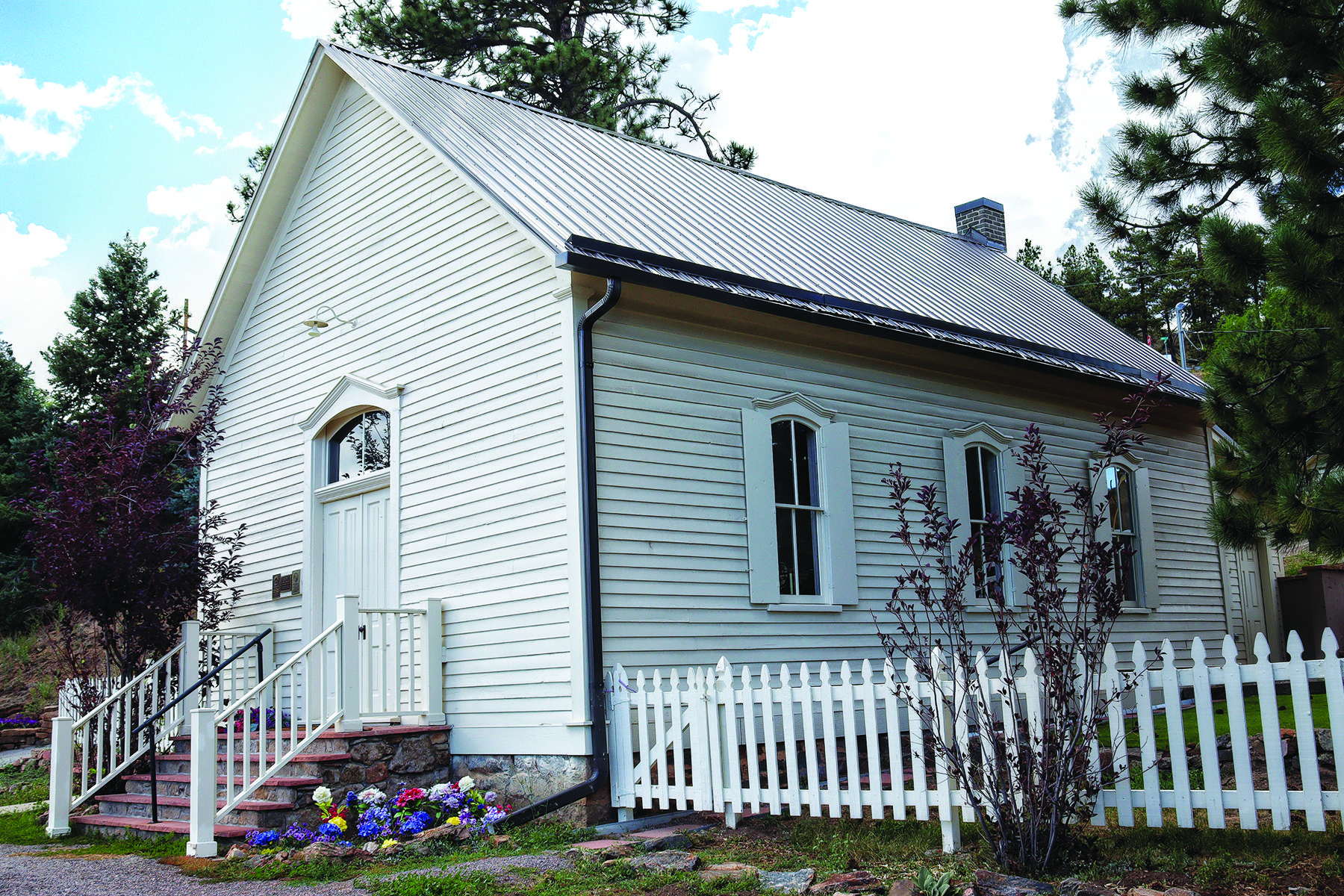
Tucked away down Rockland Road sits a piece of local history nearly 150 years old. In the foothills of Golden, Colorado, historical remnants are few and far between, but one modest church building remains, dating back to 1879.
To Steve Engle, chairman of Historic Rockland Church and Cemetery, this place is more than just the name—it’s a community built on historical figures who have shaped the Lookout Mountain neighborhood as we know it today. When Steve decided to take on restoration of this historic church building in 2007, he knew he was undertaking a project bigger than what he was capable of doing alone. The graveyard was packed with weeds going over his head, caged in by a disintegrating barbed wire fence crawling with mice and rats. The church doors were hanging off the hinges, surrounded by slabs of unpainted, decaying wood, and windows that were nailed shut. When Steve had the idea of renovating the church, he recalls being told, “No one cares,” to which he responded, “Well, I care… so someone does.” Steve knew that in order to preserve the church, he had to be the one to take the first step, and it soon became clear, Steve wasn’t the only someone who cared.
“Historic Rockland is now its own nonprofit entity, separate from Rockland Community Church and Ralston Elementary School.”
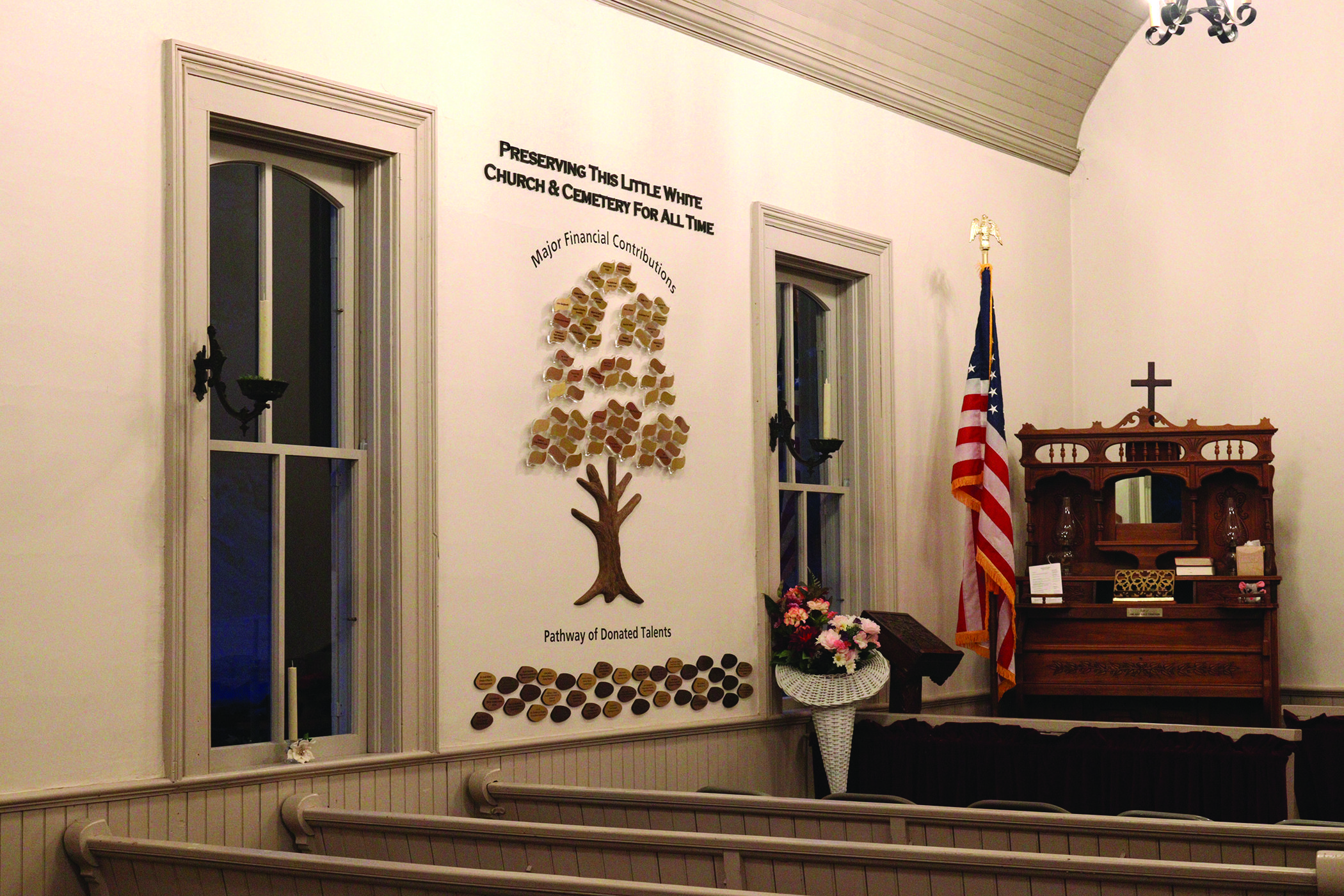
When I went to interview Steve, he immediately took me into the church building, detailing every piece of art, history and symbolism. As he began naming all of the individuals and organizations who lent a helping hand, he motioned over to the left wall, where a tree-like structure is mounted, each golden leaf imprinted with a name. Above the tree reads, “Preserving This Little White Church & Cemetery for All Time.” The wall symbolizes the breadth of skill and talent needed to sustain this church, from architects to genealogical services, fundraisers, engineers and lawyers. “Historians hate anonymous,” he told me. “There’s power in a name.”
Much of the work to maintain the church grounds at Historic Rockland is by community service fulfillments through the Jefferson County Justice Services. Steve describes having these people as a blessing. He remembers the first time they pulled up with two trucks and 18 workers. Within one day, the gates came down and the weeds were trimmed, revealing once camouflaged tombstones. “When they show up, it’s amazing,” said Steve. “I nurture them.” And Steve truly doesn’t underestimate the value of his workers. He created a small, yard-like area under a shaded tree, where he provides a space for breaks, often offering cookies and sodas.
By 2011, the church was finally usable again and began to host two services a year: one on Memorial Day and one on Christmas Day, complete with a bell choir and seats teeming out the door.
But Steve didn’t stop here. The next big project? A bridal suite. While the original outhouse (still intact) is certainly a notable characteristic, it doesn’t quite fit the needs of a bridal party, or their guests. So, with the help of his crew, Steve successfully installed the most charming little restroom, designed with a bride and her crew in mind. What was intended to be a groom’s hideout on the other side of the church, soon became a storage unit filled with tools and supplies needed for upkeep. As his determined nature would foretell, Steve hasn’t given up on this idea yet, and a real storage shed is in the works. In other words, the groom’s man cave is coming soon.
Beyond the walls of the church building itself is a graveyard filled to the brim with stories, history and community. For the entire chronicle of tales, you’ll have to take the tour from Steve himself, but the history is too rich not to share some of it.
“Steve knew that in order to preserve the church, he had to be the one to take the first step… ”
Taking a step back to the very beginning of recorded history, the first known inhabitants of Lookout Mountain were the Native Ute Tribes, whom we have to thank for the name as they used the mountain peaks to look out at the surrounding lands (Lookout Mountain, 2026). Soon after, when Colorado was Kansas Territory, the same road that Historic Rockland sits by had wagons hauled up from what is now Denver. Steve explains how the people who moved here and became a part of this community didn’t have a religious place, “but they were Catholics, they were Jewish, they were Lutherans, they were Presbyterians, Episcopalians, Methodists.… ” Steve emphasized, “They all met together as a community, and so I’ve kept this church available to anyone.”
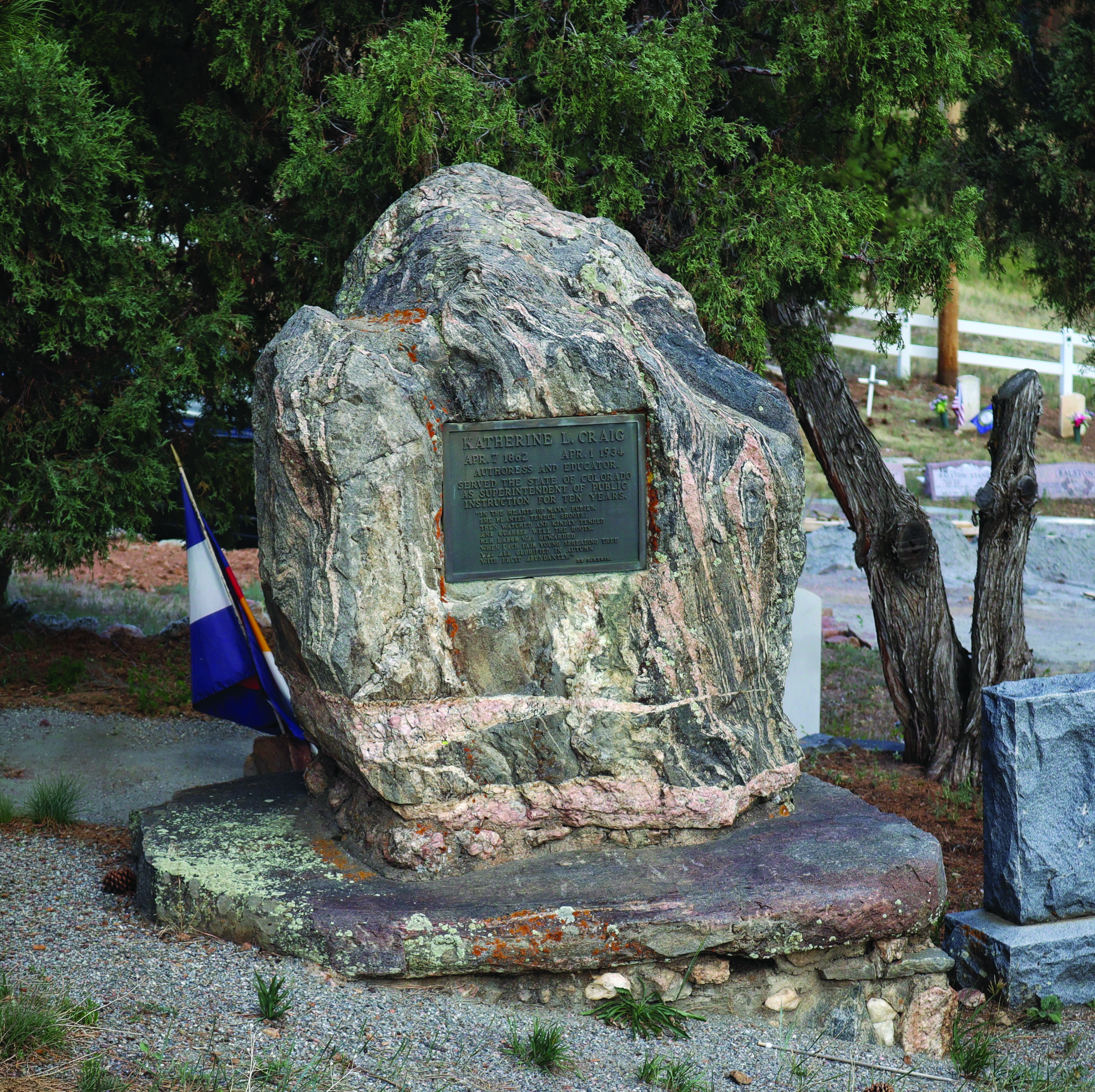
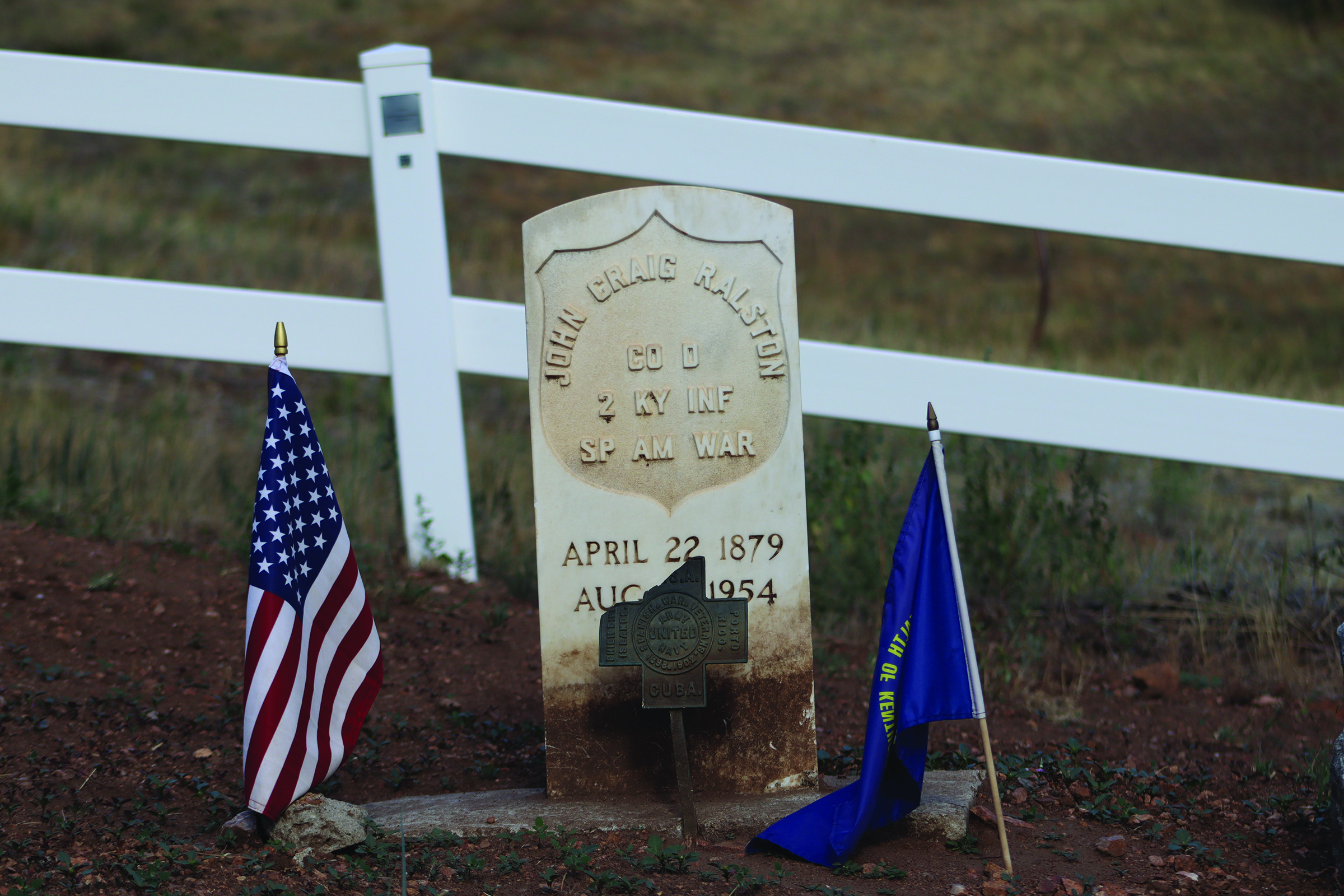
In the midst of renovations, Steve was mowing through the buried graveyard when his mower was halted to a stop by John Craig Ralston’s tombstone that, at the time, was just barely sticking out of the ground. Steve described how the renovations included repositioning tombstones, many of which belong to Ralston family members. Captain Lucian Hunter Ralston, for instance, born in 1830, was a Civil War captain for the Union Army and he explored the area in 1855 when he mapped Mount Vernon Canyon. His son, Lucian McKee Ralston, coined the name “Rockland” as the school was originally called “Rockland School” back when it was just a one-room schoolhouse that sat across from the church. Across from the Ralstons sits a conspicuous tombstone—larger and more prominent than any others in the graveyard. This belongs to Katherine L. Craig, one of the first educators at the schoolhouse, who was also elected Colorado’s Superintendent of Public Instruction three times in the early 1900s. Many aspects of her curriculum are still used in Colorado schools today. The beginning of our state’s stellar reputation in public education began right here.
Steve takes great value in remembering these names and their stories, along with many, many more. “They struggled with life. It’s not easy, you know. So that’s what cemeteries are. They speak to the present and the future,” Steve told me. “I love them all.”
The belief of love and acceptance are affirmed by what Steve calls his “mission statement,” which is plastered on a large stone in between gravesites: “Desiderata.” A portion of the famous Max Ehrmann poem reads, “You are a child of the universe no less than the trees and the stars; you have a right to be here. And whether or not it is clear to you, no doubt the universe is unfolding as it should. Therefore, be at peace with God, whatever you conceive Him to be.”
Historic Rockland is now its own nonprofit entity, separate from Rockland Community Church and Ralston Elementary School. Nonetheless, the origins of our town live in these grounds, and it should not be forgotten. Whether you come here for worship, a wedding, volunteering, learning… or just to try out Steve’s “graveyard scavenger hunt,” this is a place for community, and all are welcome.
At the end of the interview, I asked Steve what he envisions for the future of this place. After a moment of silence, Steve said, “That’s a great question. Let me put that question back to you. What do you think it should be? If this was yours, and it is yours… if this was your building and you belong here and your family belongs here,” he pondered, “what do you think it should be?”
So this is the same question I want to pass along to the entire community. To all who call Lookout Mountain their home, this church and this history is yours too. The future is in all of our hands. What do you think it should be?
References
“Lookout Mountain,” Visit Golden, 31 Mar. 2026, bit.ly/4zMcFLY